There’s a particular kind of tiredness that has nothing to do with how many hours you slept. You walk into your bedroom at the end of a long day and something about it keeps you wired — the overhead light glaring down, a pile of laundry on the chair, a phone charging on the pillow beside you. The room is working against the very thing it’s meant to help you do.
Across a run of recent design features, writers and interior designers keep circling the same gentle conclusion: a restful bedroom is less about spending money and more about removing friction. The fixes are small, and most of them are free.
Start with the light
If there’s one thing experts agree on, it’s that lighting shapes how a room feels before anything else does. According to Better Homes & Gardens, the first thing many experts suggest changing when a bedroom doesn’t feel restful is the lighting — swapping a single harsh overhead source for softer, lower, layered light.
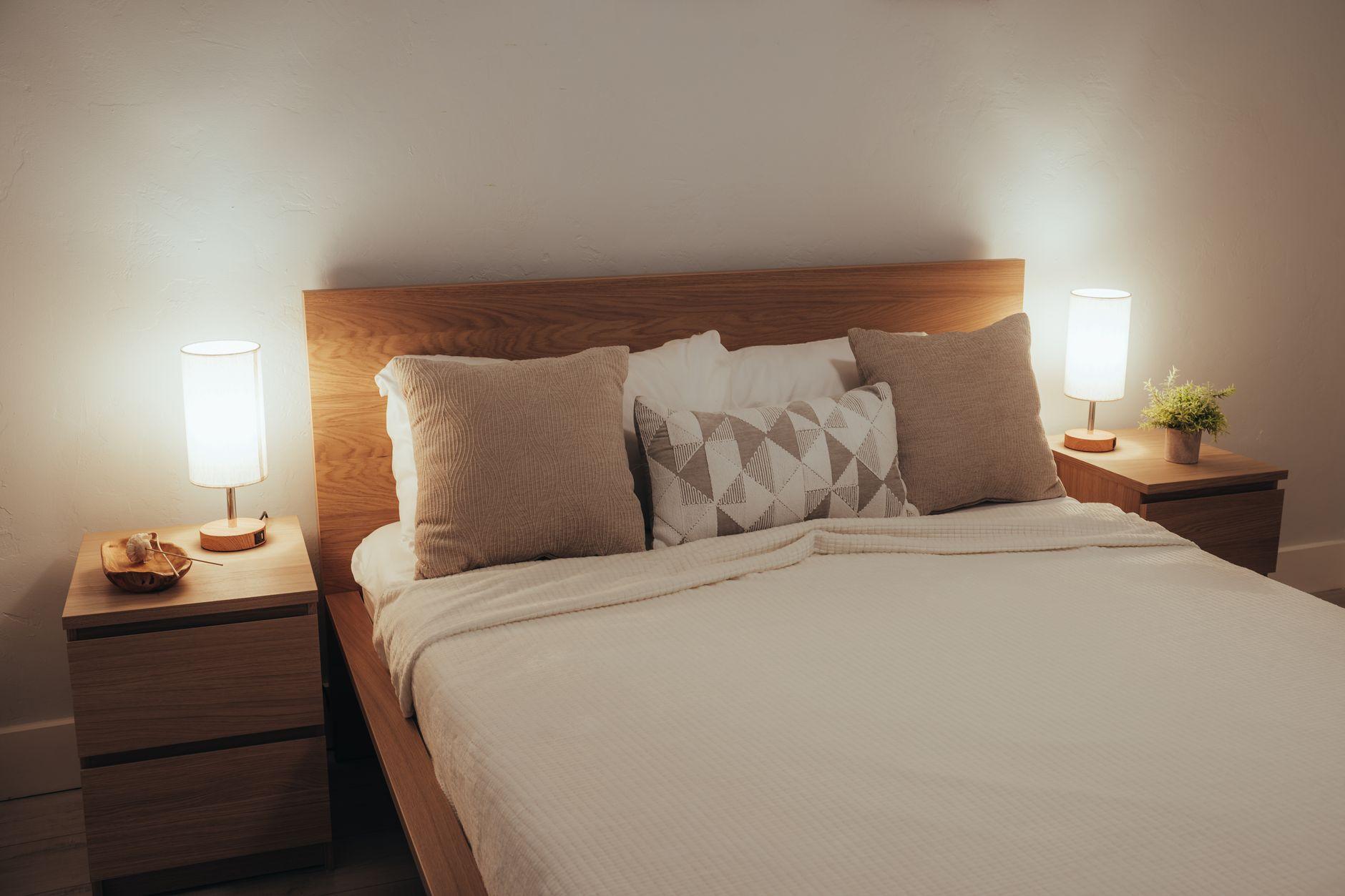
The idea is to give your eyes permission to wind down. A warm bedside lamp, a dimmer switch, a low glow rather than a ceiling floodlight — these cues tell your body the day is closing. As House Beautiful notes in its rundown of design tricks for better sleep, the goal is a room that eases you toward rest rather than one that keeps you alert.
Clear the clutter you’ve stopped seeing
Most of us stop noticing the mess in our own bedrooms. The chair that’s become a wardrobe, the nightstand buried under receipts and charging cables — it fades into the background until the room feels vaguely heavy without us knowing why.
The Spruce, in its list of small changes to make any bedroom more relaxing, points to the quiet power of tidying and smart storage. It doesn’t require a renovation. It’s the kind of reset you can do with a pretty basket, a drawer, or a Sunday afternoon and a bin bag. If you’d like a gentle, step-by-step version of this, we’ve written before about how to turn your bedroom into a room that lets you rest.
Let colour do some of the work
Colour carries mood. Several outlets have leaned into soft, muted palettes as a path to calm — Real Simple rounded up soothing paint shades designers reach for when they want a bedroom to feel genuinely restful, the sort of gentle greens, warm neutrals and dusky blues that don’t shout for attention.
You don’t need to repaint to borrow the principle. Bedding, curtains and a throw in quieter tones can shift the temperature of a room. The thread running through all of it is restraint — a palette that lets your mind settle rather than one that keeps it busy.
Permission to break the rules
If all of this feels like one more set of standards to live up to, there’s reassurance there too. Southern Living reports that interior designers happily break plenty of so-called bedroom rules — proof that the “right” bedroom is really just the one that feels right to you.
The simplest place to begin
If you only change one thing this week, make it something small and sensory:
- Soften the light — one warm lamp instead of the big overhead.
- Clear one surface — the nightstand or the chair that’s become a shelf.
- Move the phone — charge it across the room, not on the pillow.
A restful bedroom isn’t a finished project; it’s a room that’s slowly been made kinder. For more on that slow, forgiving approach, see our take on making your bedroom feel like a place to rest. None of it has to happen at once. The room will meet you halfway.
Photo by Osmany Mederos on Pexels