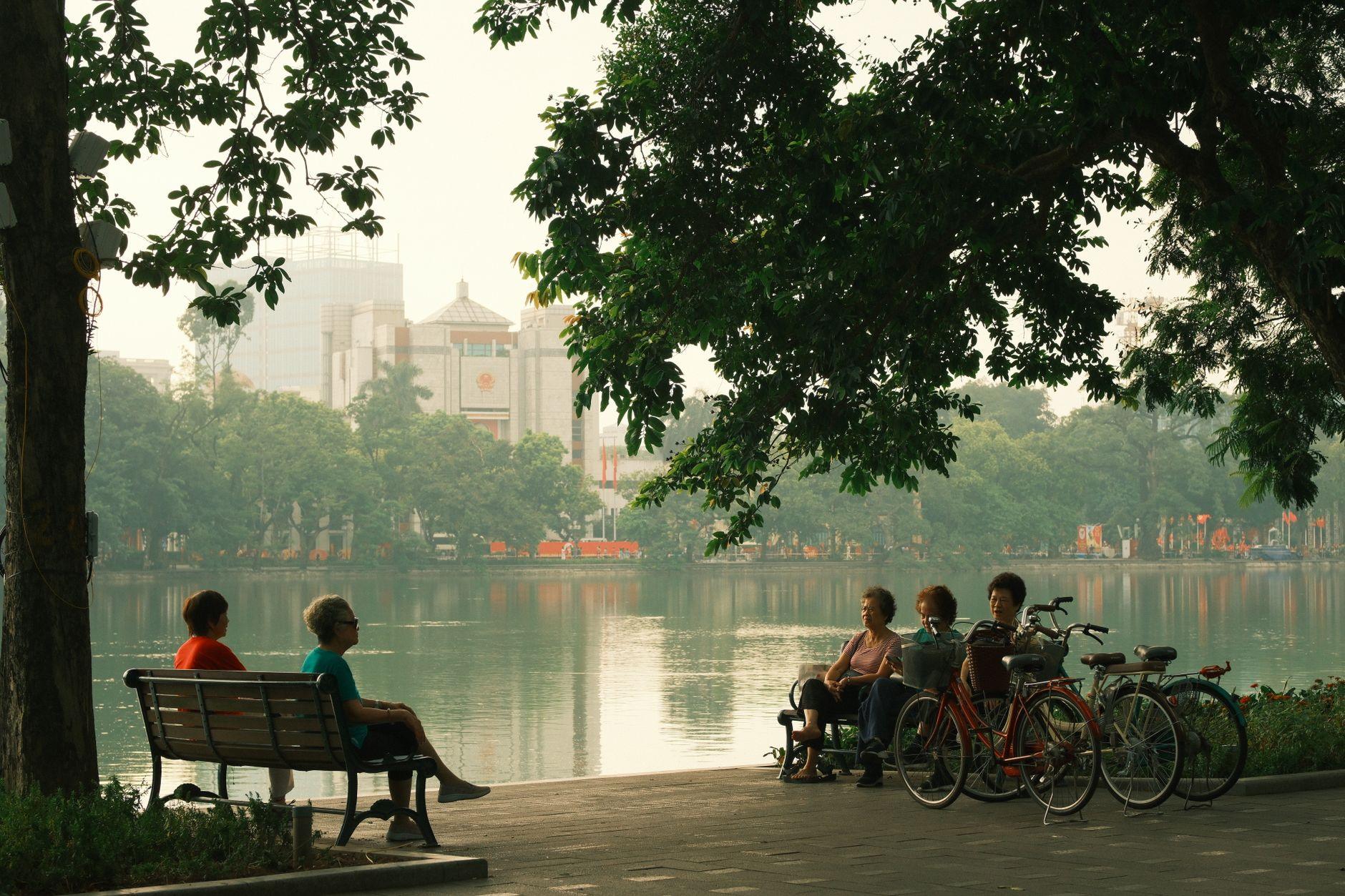
There’s a particular kind of warmth that comes from walking into a room where people know your name. It isn’t grand. It’s the book club that saved you a chair, the Saturday league that notices when you miss a game, the neighbor who waves you over. And according to a growing body of research, that feeling isn’t a bonus prize for the socially gifted — it’s something that tends to grow out of a simple, repeatable act: showing up.
The link between involvement and belonging
Recent polling from Gallup points to a clear pattern: Americans who are more involved in their communities report a stronger sense of belonging — and, notably, a greater sense of agency, the feeling that they can actually shape what happens around them. The two seem to travel together. When people participate, they feel they matter. When they feel they matter, they participate more.
That second part is worth sitting with, because it’s not guaranteed. A report in the Chronicle of Philanthropy notes that nonprofits are now investing serious money into measuring belonging — treating it not as a fuzzy feeling but as something real enough to track and strengthen. Meanwhile, as reported by the American Immigration Council, only about one in four Americans believe they can influence outcomes in their own local community. That gap — between the belonging that involvement can create and the powerlessness so many feel — is exactly the space community groups exist to fill.
Why it matters beyond the warm fuzzies
This is more than a mood. Writing in Healthy Debate, commentators argue that belonging deserves to be understood as a public-health concern in its own right — not merely the flip side of loneliness, but a positive force worth building deliberately. We’ve written before about why belonging, not just company, is what so many of us are actually missing, and the distinction holds up here. You can be surrounded by people and still feel like a stranger. Belonging is the part where you’re known.
Small groups doing the quiet work
You can see the theory playing out in ordinary places. FOX 13 in Utah reported on a bilingual book club helping women find community and a sense of home — the kind of modest gathering that does far more than discuss chapters. We’ve looked at how a bilingual book club quietly builds a sense of home for similar reasons: shared language, shared pages, a standing reason to return.
Elsewhere, outlets have described a Santa Rosa women’s group whose unofficial motto — “we’re just glad you’re here” — captures the whole idea in five words, and a Leeds LGBTQ+ group that opened a free space explicitly for connection and belonging. The settings differ. The mechanics don’t: a regular time, a welcoming door, and people who notice you.
How to put it into practice
If the research has a takeaway, it’s that belonging responds to action more than intention. A few low-stakes ways in:
- Pick one recurring thing. A monthly club or weekly walk beats a dozen one-off events — repetition is where recognition grows.
- Make the first gesture. Guidance from Greater Good stresses that welcoming newcomers is a skill worth practicing, not a personality trait.
- Lean on third places. The cafés, libraries and rec halls that aren’t home or work are where a lot of this begins — the everyday spots that quietly hold a community together.
What remains genuinely open is how much of this is cause and how much is effect — whether involvement builds belonging or confident, connected people simply get more involved. The honest answer is probably both. But the door swings in a hopeful direction: you don’t have to feel like you belong before you turn up. Sometimes turning up is how the belonging starts.
Photo by Elvis KAMBIRE on Pexels