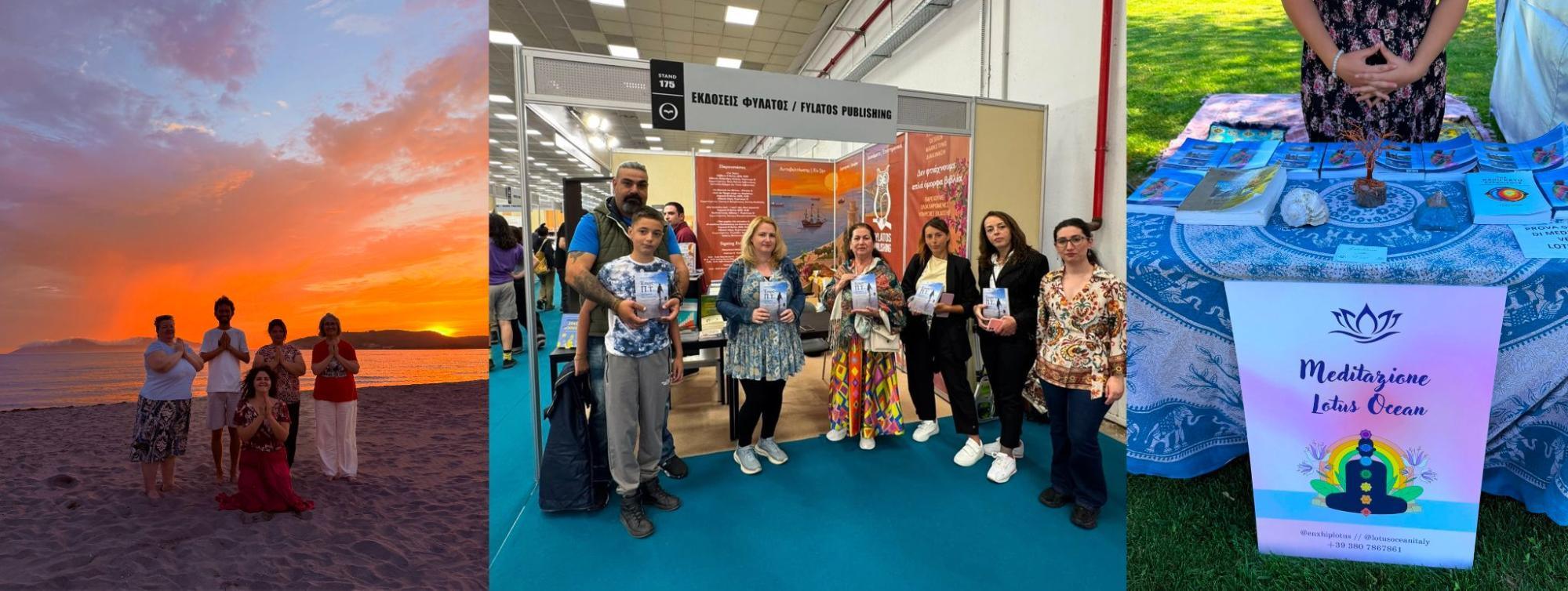
A meditation group can gather in one room or bring people together across distances. In either setting, each participant has a personal experience within a shared period of practice. Meditating alone offers a different arrangement: the individual determines when and where to set that time aside.
LotusOcean Meditation is practiced by groups around the world, both in person and online. It forms part of Lotus Ocean, the body of work created by Prashant Trivedi, a Vedic Guru, author, linguist, audio-visual artist, filmmaker, and scholar. The practice is intended to support presence, centering, self-awareness, and a sense of connection.
Meditation in an Individual Setting
When someone meditates alone, the surrounding conditions can be arranged around that person’s circumstances. The time available, choice of location, and other demands on the day all influence when the practice takes place. There is no need to coordinate those decisions with other participants.
That flexibility can make room for a session at different points in a routine. An individual might set aside time before work or after another activity, choosing a location that suits the occasion. The person can also decide how long to spend without affecting the timing of a group.
The setting introduces its own details. A familiar room may contain household sounds, while a place outdoors brings the surrounding environment into the experience. Those conditions can vary from day to day, even when an individual returns to the same location.
Individual practice can also offer privacy. A person who wishes to reflect without others present can choose a space accordingly. The arrangement leaves the individual responsible for finding the time and deciding how the practice fits with other commitments.
A person who takes part in a group might also set aside time for reflection independently on other days. The two settings can form different parts of a routine, depending on the time and opportunities available.
Meditation takes different forms, and an individual setting does not establish a particular method. Within Lotus Ocean, the stated purpose of meditation includes self-awareness and a deeper sense of connection with nature. Its group practice gives those interests a shared setting as well.
Group Meditation Within Lotus Ocean
A group gathers around an agreed period of practice. The participants have that time in common, even though each arrives with different experiences and responsibilities. Individual reflection takes place within an occasion shared with other people.
The arrangement involves coordination. A group needs a time and a way to meet, which can make participation less flexible than choosing a private session independently. The gathering also gives participants an opportunity to come together around a shared activity.
The social setting can continue beyond the period of meditation itself. People may arrive together or have an opportunity to speak before or after a session, depending on how the gathering is organized. Those exchanges are separate from the individual experience of contemplation.
The group practice of LotusOcean Meditation takes place across different geographic and cultural contexts. Lotus Ocean describes the practice as a way to explore presence and centering while considering the individual’s relationship with the living Earth and the wider field of life. Participants in Lotus Ocean’s practice describe experiences including greater calmness, groundedness, and connection with nature. These are individual accounts, and they do not establish that everyone experiences the practice the same way.
LotusOcean Meditation and its emphasis on awareness form part of a wider philosophy that connects reflection with action. Within Lotus Ocean, communication, relationships, creativity, and decision-making are among the areas in which awareness relates to everyday life.
Meeting Online and in Person
Groups that meet online can include people in different places. An agreed time still needs to suit participants, particularly when they live in different time zones. Each person also joins from an individual environment, with its own surroundings and possible interruptions.
Travel is another practical consideration. An in-person gathering requires participants to reach a shared location, while an online meeting can take place without that journey. Distance, availability, and the opportunity to meet others in person can all influence which arrangement someone chooses.
The physical setting is shared differently in each format. People who meet in a room encounter the same space, while online participants remain in separate surroundings. A person joining from home may need to consider where the meeting fits among the other activities taking place there.
LotusOcean Meditation in person and online belongs to a body of work that also includes publications, original music, film, and education. The written work of Lotus Ocean includes The Rahu Ketu Experience (2002) and The Book of Nakshatras: A Comprehensive Treatise on the 27 Constellations (2005), both in Jyotish, the Vedic astrological tradition.
P's giTa – scriPTures for the Now also considers life, consciousness, and the application of Vedic principles. These publications give Lotus Ocean a written foundation for an inquiry that also finds expression through meditation.
Online and in-person groups offer different ways to come together around the practice. In each setting, Lotus Ocean places contemplation within a wider interest in awareness, everyday life, and connection with nature.
About Lotus Ocean
Lotus Ocean is the body of work created by Prashant Trivedi, a Vedic Guru, author, linguist, audio-visual artist, filmmaker, and scholar. Combining Vedic wisdom with meditation, education, music, literature, and film, LotusOcean provides practical tools for integrating timeless Vedic wisdom with a (W)holistic approach to inner development, personal growth, and conscious living. Prashant Trivedi is the author of The Book of Nakshatras: A Comprehensive Treatise on the 27 Constellations (2005), The Rahu Ketu Experience (2002), and P's giTa – scriPTures for the Now, continuing to build an integrated body of work that brings ancient Vedic principles into meaningful dialogue with the modern world. The connected disciplines of Lotus Ocean offer ways to explore this work.