Roy Peires and the Evolution of Hospitality-Led Giving Programs
Giving programs in the hospitality sector often begin with seasonal donation drives or short-term charity partnerships. These efforts can provide real value, but their timeframes may limit how deeply they support community needs. Roy Peires, founder of the IDILIQ Group and the IDILIQ Foundation, has spent decades developing a different model, one in which the operational infrastructure of a hospitality organization can serve as a continuing charitable resource. Based on the Costa del Sol, Spain, the work of the IDILIQ Foundation shows how hospitality-led giving programs can be structured, sustained, and extended through long-term partnerships.
The trajectory of that evolution is worth examining in detail. It connects charitable accommodation, community partnerships, education support, healthcare relationships, disability services, and industry advocacy into a practical model for hospitality-linked giving.
From Seasonal Gesture to Structural Commitment
The earliest and most common form of hospitality giving often involves redirecting a percentage of revenue during high-profile periods, including holiday campaigns, awareness months, or anniversary events. These programs can generate goodwill and provide useful support, but the relationship between operator and charity may end when the campaign cycle closes.
Roy Peires has operated on a longer timeline. The IDILIQ Foundation’s relationship with Christel House, an international education charity that supports children in underserved communities, has continued for more than twenty years. The Foundation’s partnerships with healthcare organizations across the Málaga region, including Cudeca, AECC Málaga, and Afesol, are maintained on an ongoing basis rather than activated only around a calendar event.
This structural difference matters because sustained relationships allow organizations to plan, build capacity, and maintain continuity. The shift represented by Roy Peires and the evolution of hospitality-led giving is not simply about whether a business gives. It is about how a giving program can become part of an organization’s long-term approach to community support.
The Kind Holidays Model: Capacity as Charitable Currency
The most operationally distinctive element of the IDILIQ Foundation’s hospitality-led giving model is Kind Holidays, a program that donates accommodation at IDILIQ Hotels and Resorts to families navigating exceptional hardship. Recipients include families with critically ill children, military families affected by service-related injury, carers supported through the Carers Trust, and families connected to bereavement organizations.
What makes the Kind Holidays model significant is the resource it uses. The program does not depend only on a separate donations fund. It draws on hospitality inventory itself, allocating accommodation that may otherwise sit unoccupied to families who could not otherwise access it.
Since resuming following the COVID-19 shutdown, Kind Holidays has provided free stays to more than 2,300 people through partnerships with over a dozen charities. Roy Peires’ approach to charitable hospitality programs has also included public encouragement for hotels, airlines, cruise lines, and tourism operators to consider whether their own unused capacity could be directed toward similar purposes. The idea is practical: the resource already exists, and with the right charity partners, it can be used to provide meaningful relief to families during difficult periods.
Infrastructure Investment and the Limits of Cash Giving
Cash donations serve an important function in charitable ecosystems. They can support operations, cover immediate needs, and help organizations respond to changing circumstances. At the same time, some community needs require physical infrastructure that can support services over the long term.
The IDILIQ Foundation’s decision to fund the construction of the F. Cruz Dias-ADIMI Care Centre illustrates this broader philanthropic philosophy. Built in partnership with ADIMI, the Centre provides services to individuals with cognitive and developmental disabilities. This population often requires consistent, specialized support and access to dedicated facilities.
A staffed and operational building can provide services continuously. For a hospitality organization with the capacity to support construction, funding a facility of this kind represents a form of community investment that remains useful beyond the initial contribution. In this context, community programs associated with Roy Peires show how hospitality-led giving can support durable assets as well as immediate assistance.
Roy Peires on the Role of Peer Operators
One consistent dimension of this approach is its relevance beyond a single organization. The IDILIQ Foundation’s programs are not only charitable initiatives within one group. They also provide a working example of how the broader hospitality sector can apply existing resources to community needs.
Hotels generate time-sensitive inventory. A room night that goes unsold cannot be recovered later. Airlines and cruise lines face similar constraints with seats and cabins. The opportunity identified by Roy Peires is that unused capacity can be converted into charitable benefit when operators coordinate with established nonprofit partners and manage the administrative requirements of a giving program.
Kind Holidays demonstrates that this coordination can be achieved. Its growth from a program concept into an initiative that has served more than 2,300 people through partnerships with more than a dozen charities gives peer operators a practical reference point. It shows that hospitality infrastructure can be used not only to serve paying guests, but also to support families facing serious hardship.
A Twenty-Year Horizon
The clearest evidence that this giving model differs from short-term hospitality philanthropy is the time horizon over which it has operated. Charitable programs tied mainly to promotional calendars may change as business priorities shift. Programs embedded in an organization’s culture and operations are more likely to continue through changing conditions.
The IDILIQ Foundation’s support for Christel House spans more than two decades. Its healthcare and disability partnerships across the Costa del Sol have continued through periods of disruption, including the COVID-19 shutdown that affected hospitality operations and charitable activity across the sector. Kind Holidays resumed and expanded following that period rather than being discontinued.
The evolution of hospitality-led giving programs, as reflected in the IDILIQ Foundation’s record, is a movement toward continuity. It treats accommodation as more than a commercial asset, recognizes the value of long-term charity partnerships, and connects hospitality resources with community needs in a structured way. Roy Peires and the IDILIQ Foundation have helped demonstrate how this approach can support families, healthcare organizations, disability services, education initiatives, and nonprofit partners over time.
About Roy Peires
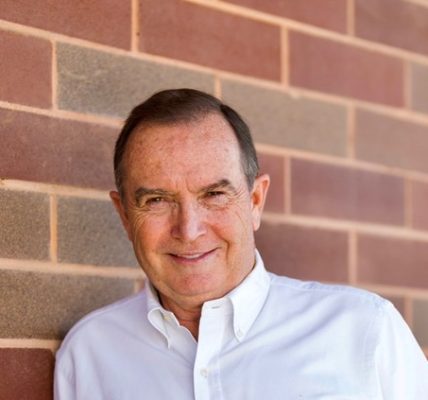
Roy Peires is the founder of the IDILIQ Group and the IDILIQ Foundation, with decades of experience in international hospitality leadership and charitable programme development. Based on the Costa del Sol, Spain, Roy Peires specializes in hospitality management, community investment strategy, and the development of long-term giving programs connected to charitable partnerships and community support.
Through the IDILIQ Foundation, learn more about Roy Peires and the programs connected to hospitality leadership, family support, charitable accommodation, and long-term community engagement.