Chinedum Ndukwe’s Approach to Ethical Development: Building Trust in Every Project
Ethics in real estate development is rarely debated in the abstract. It shows up in the choices made at each stage of a project: which communities are served, how financing is structured, and whether commitments to housing authorities and residents are honored over time. For Chinedum Ndukwe, the founder and principal of Kingsley + Co. in Cincinnati, Ohio, ethical development is not a stated value separate from the work. It is the operational logic that shapes how every project is selected, executed, and maintained.
More than a decade into running a licensed commercial real estate brokerage and development firm, Chinedum Ndukwe has built a practice where trust is treated as both a professional standard and a practical requirement. The Cincinnati affordable housing and mixed-use market is the sector where that practice has been tested most consistently.
The Foundation Behind Chinedum Ndukwe’s Ethical Development Practice
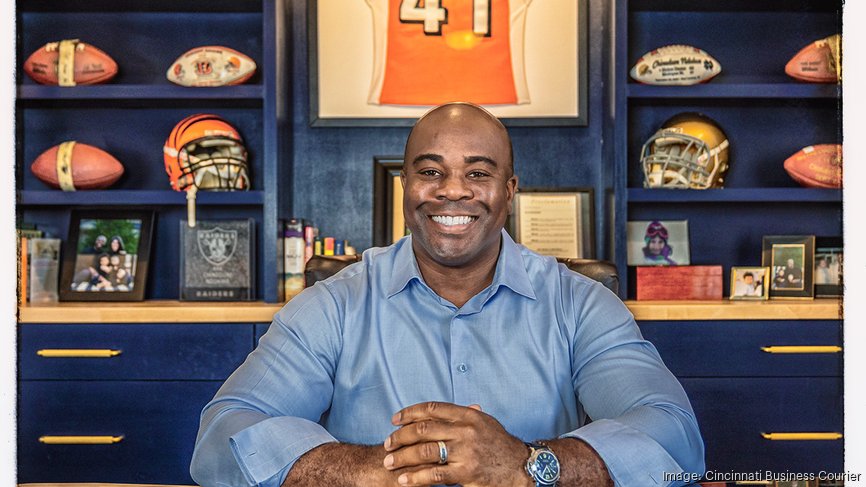
The discipline behind Kingsley + Co.’s development philosophy did not originate in real estate. A Virginia native and son of two Nigerian immigrants, Chinedum Ndukwe graduated from the University of Notre Dame in 2007 with a double major in Business Management and Psychology. He followed that with executive education at Harvard Business School in 2008 and the NFL Business Management and Entrepreneurship Program at the Wharton School of Business at the University of Pennsylvania in 2009. Between 2007 and 2012, he played professional safety for the Cincinnati Bengals and Oakland Raiders.
Those years of structured preparation established a working standard that now runs through every aspect of Kingsley + Co.’s operations. Understand the environment fully before committing. Meet obligations precisely and on time. Build relationships on demonstrated performance rather than stated intention. These are not rhetorical principles. They are the operational behaviors that distinguish ethical development practice from work that merely describes itself as community-minded.
What Ethical Development Looks Like in Practice
Ethical development can be described in many ways, but it is most clearly understood through the project decisions a firm makes and the outcomes those decisions produce. Three patterns in Kingsley + Co.’s work illustrate what that looks like in practice: how the firm scopes projects to its actual capabilities, how it delivers on regulatory commitments to vulnerable residents, and how it maintains compliance over time rather than only at delivery.
How Chinedum Ndukwe Matches Project Commitments to Firm Capabilities
One of the most common failures in community-focused development is the gap between what a firm promises and what it can deliver. Ethical development begins before a project is announced. It begins when a developer accurately evaluates the firm’s own capacity against the demands of a given project. That evaluation must account for financial, operational, and relational capabilities in equal measure.
Kingsley + Co.’s dual structure as both a licensed brokerage and a development company reflects this kind of honest self-assessment. By maintaining both functions in-house, the firm does not overcommit to project scopes it cannot manage from start to finish. When Kingsley + Co. takes on an affordable housing development, the firm has direct oversight of brokerage, financing coordination, regulatory compliance, and long-term project stewardship. Accountability is not outsourced to parties who were not part of the original community commitments.
The Blair at Victory Vistas: Accountability in Action
The Blair at Victory Vistas is an affordable housing development in Cincinnati that secured 11 housing vouchers for low-income residents through the Cincinnati Metropolitan Housing Authority. That outcome is a specific, documented result rather than a general commitment to community benefit.
Reaching it required meeting documented eligibility requirements set by a federal housing authority, sustaining a project timeline through multiple regulatory review cycles, and maintaining property standards that preserved voucher eligibility after delivery. Each of those requirements demanded precision and follow-through, not once but consistently across the full project lifecycle. Chinedum Ndukwe’s development record in Cincinnati reflects what the firm’s ethical commitments look like when they are tested against a real compliance framework rather than evaluated in isolation.
For the 11 households that secured housing through those vouchers, the difference between a developer who follows through and one who does not is not a matter of principle. It is the difference between stable housing and the absence of it.
Building Trust Through Cincinnati Housing Authority Compliance
Housing voucher programs are not lenient. The Cincinnati Metropolitan Housing Authority maintains eligibility standards that are applied continuously, not just at project completion. A developer whose property falls out of compliance loses the vouchers tied to it, which directly harms the residents who depend on them. Maintaining compliance year over year requires sustained investment in property management, documentation, and ongoing coordination with the housing authority. That work generates no new headlines, but it sits at the center of what ethical development actually requires.
Kingsley + Co.’s engagement with those obligations reflects the same standard of preparation that Chinedum Ndukwe developed through his academic and professional background. The investment in executive education at Wharton and Harvard was, in part, an investment in the analytical discipline required to manage these compliance structures without gaps.
Community-Centered Development as Chinedum Ndukwe’s Project Selection Framework
Kingsley + Co.’s stated development priorities of family, community, real estate, and affordable housing are not a branding exercise. They function as a project selection filter. When a development opportunity does not align with those priorities, the firm does not pursue it. This is a meaningful constraint in a commercial real estate environment where deal volume often drives project selection.
The decision to remain focused on affordable housing and mixed-use development in Cincinnati is itself an expression of the firm’s ethical orientation. Cincinnati has documented affordable housing gaps that affect lower-income neighborhoods and working families. Chinedum Ndukwe’s approach to project selection prioritizes that sector consistently, which reinforces the firm’s positioning as a long-term participant in Cincinnati’s affordable housing landscape rather than an opportunistic one.
That focus also requires honesty with investors, lenders, and public agency partners about projected returns and project timelines. Transparency on these inputs distinguishes ethical developers from those who obscure trade-offs in order to close financing.
How Chinedum Ndukwe Uses Civic Engagement as Ethical Accountability
The board positions held by Kingsley + Co.’s founder are not separate from his development practice. He serves on the Mayor of Cincinnati’s Task Force on Immigration, the Mercy Health Board of Directors, and the Notre Dame Athletics Monogram Board of Directors. Chinedum Ndukwe’s civic engagement in Cincinnati places him in institutional settings where the policy environment affecting his development work is actively shaped, and where the consequences of that work for real communities remain visible.
A developer who participates in public health governance understands, at a board level, how housing instability contributes to adverse health outcomes. A developer who advises on immigration policy understands how housing supply constraints affect immigrant communities in Cincinnati. These are not talking points. They are direct inputs into how Kingsley + Co. approaches project selection and community engagement.
This layer of accountability extends beyond what project-level compliance standards alone can provide. It creates ongoing institutional visibility into the conditions that shape every development decision the firm makes.
Recognition as Confirmation, Not Validation
Chinedum Ndukwe has been recognized by the Power 25 and the ITW Young Professionals Network. Both organizations acknowledge emerging leaders with demonstrated impact across sectors in the Cincinnati region. These recognitions reflect external confirmation of a professional and civic record rather than a substitute for it. An ethical development practice is built through consistent behavior over time. External recognition is, at best, a lagging indicator of that consistency.
Building Trust Across the Cincinnati Real Estate Development Ecosystem
Trust in the development sector is not built through a single project or a single decision. It accumulates through repeated, consistent behavior across multiple projects, multiple regulatory relationships, and multiple community engagements. The work of Kingsley + Co. in Cincinnati’s affordable housing and mixed-use development markets reflects more than a decade of that accumulation.
Public housing authorities, municipal planning offices, and community organizations calibrate their willingness to partner with a developer based on track record. A firm that delivered on housing voucher commitments at The Blair at Victory Vistas enters the next project with standing that a developer without that record does not have. That standing affects financing terms, regulatory cooperation, and community receptivity. Each of those factors influences whether a project gets built and whether it serves its intended purpose.
The credibility that Kingsley + Co. has built is, in that sense, a tangible asset. It did not arrive through positioning or announcement. It was constructed through project outcomes, compliance records, and the kind of sustained civic participation that keeps a developer accountable to the communities where the work takes place.
About Chinedum Ndukwe
Chinedum Ndukwe is the founder of Kingsley + Co., a licensed commercial real estate development and brokerage firm based in Cincinnati, Ohio. He has more than a decade of experience in affordable housing development and mixed-use real estate. He holds a double major in Business Management and Psychology from the University of Notre Dame and completed executive education at Harvard Business School and the Wharton School of Business at the University of Pennsylvania. Chinedum Ndukwe serves on the boards of Mercy Health, the Mayor of Cincinnati’s Task Force on Immigration, and the Notre Dame Athletics Monogram Board of Directors. He has been recognized by the Power 25 and the ITW Young Professionals Network. For more information about his work, visit Chinedum Ndukwe’s official website.