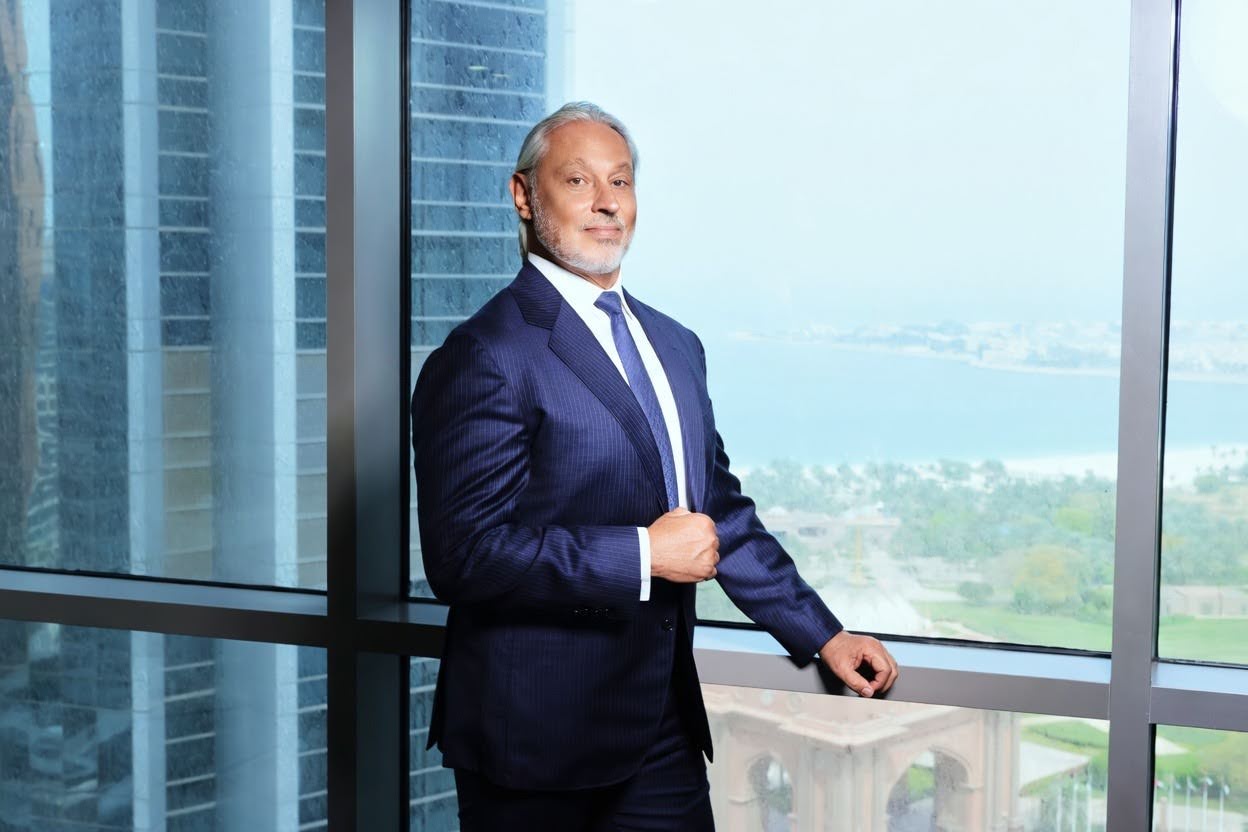
In private investment, the identity of a principal’s co-investors communicates something that credentials alone cannot. Mubadala Investment Company does not share a cap table casually. InvestCorp of Bahrain applies institutional diligence standards before committing capital. Wisayah Capital, a wholly owned subsidiary of Saudi Aramco, operates within governance expectations shaped by one of the world’s largest energy companies. The fact that Shaher Awartani, Chairman and Co-founding Partner of Silver Coast Construction & Boring LLC, appears alongside each of these institutions in Reem Hospital is not incidental background information. It is part of the investment signal itself.
For nearly three decades, the Abu Dhabi businessman has built a portfolio spanning construction, healthcare, private equity, real estate, hospitality, and regulated advisory activity. Across that expansion, the recurring pattern is not simply sector diversity. It is the consistent presence of institutional-grade partners and regulated operating structures that reinforce long-term governance credibility.
How Institutional Co-Investors Select Their Partners
Institutional capital operates within accountability frameworks that differ substantially from those of private individual investors. Sovereign wealth funds, state-backed investment vehicles, and institutional private equity firms evaluate not only the financial viability of an opportunity, but also the governance standards of the principals involved. Due diligence extends beyond the transaction itself into the operating history, reputation, compliance posture, and strategic consistency of the co-investor.
That process matters because institutional capital carries institutional obligations. Mubadala Investment Company manages assets connected to the Abu Dhabi government. InvestCorp answers to institutional stakeholders across multiple jurisdictions. Wisayah Capital’s decisions reflect on the governance standards associated with Saudi Aramco. When organizations of this scale enter a co-investment structure, the partnership itself becomes a form of external validation.
For the UAE-based investor, those relationships reinforce a broader pattern visible throughout the portfolio: a preference for operating environments where governance standards are formalized rather than implied. The institutional governance approach associated with Shaher Awartani reflects a model built around long-term credibility rather than short-cycle capital deployment.
Shaher Awartani and the Reem Hospital Co-Investment Structure
Reem Hospital was established on Abu Dhabi’s Reem Island in 2011 with a shareholder structure that included Mubadala Investment Company, InvestCorp of Bahrain, Wisayah Capital, and Shaher Moh’d Ali Awartani. Each institution entered the structure through its own review process, applying separate standards of diligence and governance evaluation.
That distinction is important because institutional co-investment is not a collective endorsement negotiated once on behalf of all participants. Each organization independently determines whether the principal, the governance framework, and the operating structure satisfy its requirements. When multiple institutions with different accountability systems reach the same conclusion, the convergence itself becomes meaningful.
The healthcare sector adds additional context to the partnership structure. Healthcare investment in Abu Dhabi requires patience, operational oversight, and tolerance for regulatory complexity. Hospital projects operate on long timelines and involve compliance obligations that extend well beyond capital deployment. The presence of sovereign and institutional co-investors signals that the project was evaluated through a long-horizon governance lens rather than a short-term speculative one.
The Reem Hospital structure also reflects a broader principle visible throughout the portfolio: institutional partnerships tend to recur when governance expectations are consistently met.
That continuity matters more than a single transaction because recurring partnerships suggest that operational standards remained aligned after the initial investment closed.
The Equalis Capital Co-Founding and the Diplomatic Dimension
The co-investment pattern visible in healthcare extends into regulated financial advisory activity. Equalis Capital Ltd, co-founded in 2013 within the Dubai International Financial Centre, was established alongside H.E. Yousef Al Otaiba, the UAE Ambassador to the United States.
A partnership of that type carries a distinct category of institutional significance. Ambassador Al Otaiba operates within diplomatic, sovereign, and investment networks that require sustained reputational discipline. A co-founding relationship inside a DIFC-regulated structure involves shared governance obligations, regulatory accountability, and long-term operational alignment under the Dubai Financial Services Authority framework.
The relationship did not remain isolated to a single entity. High Point Real Estate and Café Milano Abu Dhabi extended the same partnership structure into additional sectors over multiple years. Sustained co-investment relationships of this kind indicate more than transactional compatibility. They suggest that the partnership has already been tested through operational complexity, sector expansion, and evolving governance requirements.
The co-investment framework built by Shaher Awartani is notable because it emphasizes continuity over opportunistic expansion. Rather than pursuing a large number of unrelated partnerships, the portfolio reflects a smaller number of recurring institutional relationships maintained across jurisdictions and sectors.
Global Gate Capital Partners and the Geneva Context
Global Gate Capital Partners, founded in Geneva in 2015 and managing approximately USD 2 billion in assets under management, extends the portfolio into a European institutional environment. Geneva’s significance lies not simply in geography, but in its role as a center for regulated cross-border wealth management and investment advisory activity.
For Shaher Moh’d Ali Awartani Abu Dhabi, the Geneva presence complements the DIFC structure rather than competing with it. Both jurisdictions are recognized for regulatory oversight, institutional accessibility, and legal infrastructure suited to sophisticated investment activity. Choosing these frameworks repeatedly signals a preference for environments where credibility is externally verifiable rather than self-asserted.
Cross-border advisory work also requires consistency across multiple operating systems simultaneously. A principal managing relationships across Abu Dhabi, Geneva, and the DIFC must maintain governance standards capable of satisfying institutional counterparties operating under different regulatory expectations. That consistency is difficult to sustain without a deeply structured operational model.
Shaher Awartani’s institutional partnership strategy reflects this governance-first orientation. The selection of regulated jurisdictions, recurring institutional partners, and long-duration operating structures all reinforce the same strategic preference: institutional credibility built through repeatable governance rather than promotional visibility.
What the Co-Investment Model Requires of the Principal
Institutional co-investment relationships impose obligations that continue long after capital is committed. Governance standards must remain stable across the full investment lifecycle, particularly during periods of operational stress or market volatility. Institutions monitor reporting discipline, execution consistency, compliance behavior, and capital stewardship continuously rather than episodically.
That requirement helps explain why long-duration operating history matters so heavily in institutional partnerships. Silver Coast Construction & Boring LLC’s 27-year operating record and USD 1.35 billion in completed projects provide more than financial scale. The record demonstrates the ability to sustain execution across multiple market cycles while maintaining relationships with counterparties, clients, regulators, and co-investors over decades.
For the Abu Dhabi operator, the consistency between construction governance and investment governance is especially notable. A principal accustomed to delivering large-scale construction projects under formal oversight frameworks is often structurally aligned with regulated financial environments where accountability, documentation, and operational discipline are similarly central.
The 2024 launch of Yasa Capital (DIFC) Limited reinforces that continuity. Operating under a DFSA Category 4 license places the advisory business within a regulated structure requiring documented compliance and external supervision. The decision to operate within that framework reflects the same preference for institutional rigor visible throughout the broader portfolio.
Shaher Awartani and the Signal Value of Selectivity
One of the more revealing characteristics of the portfolio is its selectivity. The co-investment record is not built around dozens of small institutional relationships assembled for visibility. Instead, it centers on a smaller number of substantive partnerships that recur across multiple sectors and jurisdictions over long periods.
That selectivity strengthens the signal value of the portfolio itself. Institutional relationships maintained over years suggest that the governance standards supporting them proved durable after the initial due diligence process concluded. Recurring partnerships indicate that operational execution continued to satisfy counterparties whose standards remained high long after the transaction closed.
Shaher Awartani appears throughout the portfolio not simply as a capital participant, but as a principal repeatedly trusted within institutional environments requiring sustained accountability. That distinction matters because institutional investors conduct their own independent assessments before committing capital, reputational association, or governance alignment.
For prospective investors, advisory counterparties, and institutional partners evaluating principals in the Gulf region, the co-investment structure itself provides a measurable form of external validation. The institutions already present in the structure have completed their diligence. Their continued participation is part of the evidence.
In markets where reputational claims are easy to make and difficult to verify, the durability and quality of institutional partnerships become one of the clearest available signals.
About Shaher Awartani
Shaher Moh’d Ali Awartani is an Abu Dhabi-based businessman, investor, and regulated investment advisor with nearly three decades of experience across construction, private equity, industrial manufacturing, healthcare, hospitality, real estate, and financial advisory. As Chairman and Co-founding Partner of Silver Coast Construction & Boring LLC and Co-founder of Yasa Capital (DIFC) Limited, Shaher Moh’d Ali Awartani has built a portfolio defined by institutional governance, long-term operating discipline, and cross-border investment activity spanning the UAE and Europe. His work reflects a consistent focus on regulated advisory structures, strategic co-investment relationships, and sustained operational oversight across multiple sectors.
Learn more about Shaher Awartani’s institutional investment background.