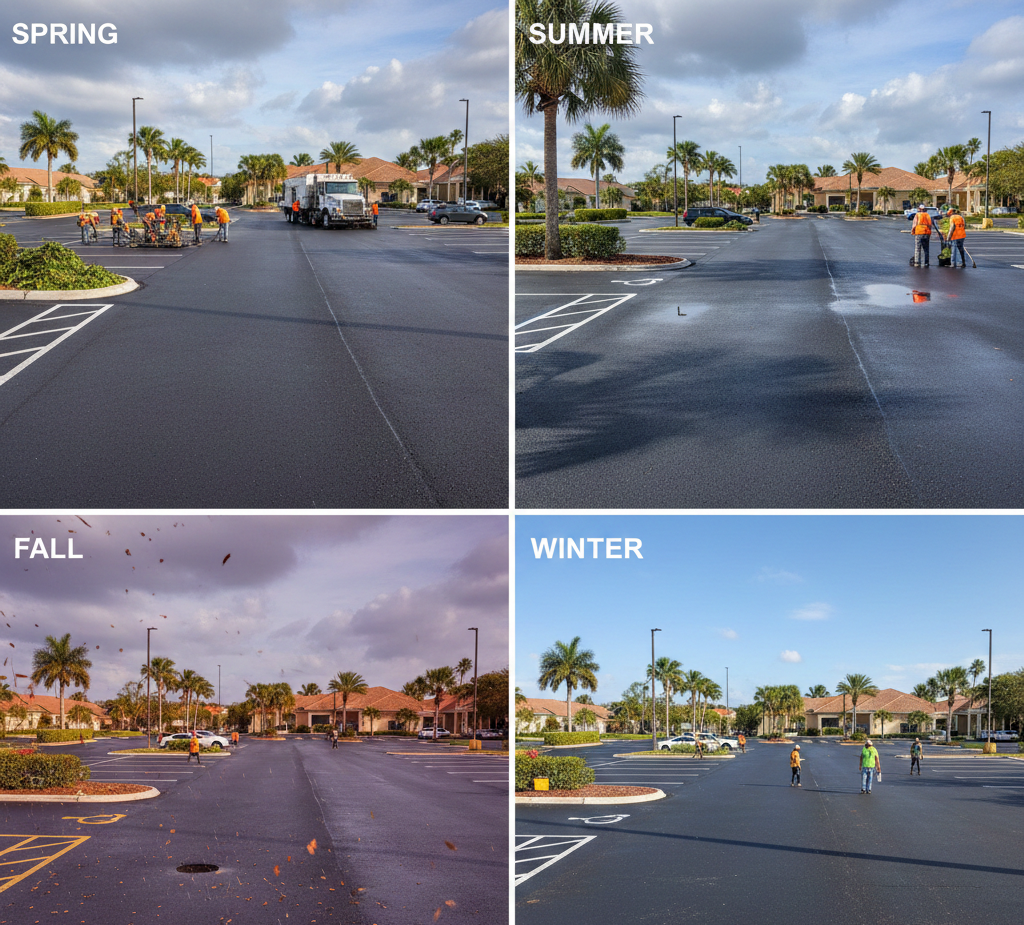
Understanding Bonita Springs Climate and Asphalt Performance
Bonita Springs experiences a subtropical climate with hot summers, mild winters, and a pronounced rainy season. Asphalt naturally expands and contracts with temperature changes, and when combined with moisture, this movement can lead to cracking, potholes, and surface deterioration.
Heat softens asphalt, making it more vulnerable to heavy traffic and oil spills. Rainwater seeps into small cracks and weakens the base layer. Over time, these issues compound. This is why local expertise matters. Contractors familiar with Parking Lot Paving Bonita Springs understand how to select materials and maintenance schedules that work with the environment rather than against it.
Spring Preparation for a Strong Start
Spring is an ideal time to assess winter wear and prepare for the intense summer heat. While winters in Bonita Springs are mild, temperature shifts and occasional cold snaps can still affect asphalt.
Start with a professional inspection. Look for surface cracks, faded striping, and drainage issues. Small cracks may seem harmless, but they can quickly expand once summer rain arrives. Crack sealing in spring helps prevent water intrusion and keeps the pavement flexible.
Cleaning is also essential. Remove debris, sand, and organic matter that may have accumulated. This not only improves appearance but also prevents moisture from being trapped on the surface. Scheduling sealcoating in late spring can provide a protective layer before the hottest months begin.
Summer Strategies for Heat and Heavy Use
Summer is the most demanding season for asphalt in Bonita Springs. High temperatures soften the surface, and frequent rainstorms increase the risk of water damage. Parking lots also tend to see heavier use during tourist season.
One of the best summer strategies is preventative maintenance. Sealcoating creates a barrier against UV rays and moisture, slowing oxidation and surface wear. For properties that see constant traffic, rotating traffic patterns when possible can reduce stress on high use areas.
Proper drainage is critical during summer storms. Standing water accelerates deterioration and can weaken the foundation beneath the asphalt. Parking Lot Paving Bonita Springs professionals often recommend adjusting slopes or adding drainage solutions to prevent pooling.
Oil and chemical spills are more common in hot weather as vehicles leak fluids. Prompt cleaning prevents these substances from breaking down the asphalt binder. Routine inspections throughout summer allow property managers to catch issues early.
Fall Maintenance to Prepare for Rain and Storms
Fall in Bonita Springs often brings continued rain and the tail end of hurricane season. This is a crucial time to reinforce your parking lot against moisture and wind driven debris.
Crack sealing remains a top priority. Any openings in the surface allow rainwater to penetrate and erode the base layer. Patching potholes before they grow larger saves money and reduces liability risks.
Fall is also a good time for line striping. Clear markings improve safety and organization, especially as daylight hours shorten. Fresh striping enhances curb appeal and reflects a well maintained property.
For commercial properties, coordinating fall maintenance with a trusted naples asphalt company can ensure consistent quality across multiple locations. Regional expertise allows contractors to anticipate weather challenges and schedule work efficiently.
Winter Care in Mild Florida Conditions
Winter in Bonita Springs is generally mild, but that does not mean asphalt maintenance should be ignored. Cooler temperatures slow down oxidation, making winter a good time for planning and light maintenance.
Routine inspections during winter help identify issues that may worsen in spring. Addressing minor cracks and surface wear now can prevent larger repairs later. Since traffic may be lighter for some properties during winter, it can be an ideal window for resurfacing or repairs with minimal disruption.
Avoid heavy loads on newly paved or repaired areas during cooler months until the asphalt has fully cured. Following contractor guidelines ensures long lasting results.
Long Term Value of Seasonal Planning
Seasonal maintenance is not just about avoiding damage. It is about protecting the overall value and safety of your property. Well maintained parking lots reduce the risk of accidents, enhance first impressions, and demonstrate professionalism.
Whether you’re managing a home or commercial property, Parking Lot Paving Bonita Springs delivers dependable asphalt protection designed to withstand heat, moisture, and heavy traffic. By working with experienced professionals and following a seasonal plan, property owners can extend pavement life and reduce long term costs.
Local contractors understand regional challenges better than national providers. They know how materials behave in Bonita Springs conditions and can tailor solutions accordingly. This local knowledge is what sets Parking Lot Paving Bonita Springs apart as a reliable partner in pavement care.
Choosing the Right Partner for Seasonal Asphalt Care
Selecting the right paving company is as important as the maintenance itself. Look for contractors with proven experience in Southwest Florida, transparent pricing, and a focus on preventative care. Reviews, local references, and clear communication are key indicators of quality service.
An experienced provider will not only complete repairs but also help you plan ahead. Seasonal checklists, maintenance schedules, and honest assessments help property owners budget effectively and avoid surprises.
By investing in professional guidance and consistent care, your parking lot can remain durable, attractive, and safe throughout the year.
Frequently Asked Questions
How often should a parking lot in Bonita Springs be inspected?
Most professionals recommend inspections at least twice a year, typically in spring and fall. High traffic commercial lots may benefit from quarterly checks.
Is sealcoating necessary every year in Florida?
Not always. Depending on traffic and exposure, sealcoating every two to three years is common. However, properties exposed to intense sun and heavy rain may require more frequent applications.
What causes potholes to form so quickly in Southwest Florida?
Potholes often develop from water infiltration combined with heat and traffic. Small cracks allow moisture to weaken the base, leading to surface collapse.
Can asphalt repairs be done during the rainy season?
Yes, but timing is important. Contractors monitor weather conditions closely and schedule work during dry periods to ensure proper curing.
How does seasonal maintenance save money long term?
Preventative care such as crack sealing and sealcoating reduces the need for major repairs or full replacement, lowering overall maintenance costs over time.